Showing posts with label crime. Show all posts

Friday, October 11, 2013

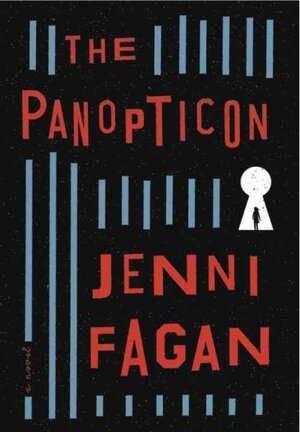
The Panopticon by Jenni Fagan


Anais Hendricks, fifteen, is in the back of a police car, headed for the Panopticon, a home for chronic young offenders. She can't remember what’s happened, but across town a policewoman lies in a coma and Anais’s school uniform is covered in blood. Raised in foster care from birth and moved through twenty-three placements before she even turned seven, Anais has been let down by just about every adult she has ever met. Yet despite the parade of horrors visited upon her early life, she greets the world with the witty, caustic insight of a survivor—and a dreamer’s heart.  

Named one of the best books of the year by the Times Literary Supplement and the Scotsman, The Panopticon is an astonishingly haunting, remarkable debut novel. I fell utterly in love with Anais, and know you will too.

Some early praise for The Panopticon:

“Fagan has given us one of the most spirited heroines to cuss, kiss, bite and generally break the nose of the English novel in many a moon.” The New York Times

“An exquisite first novel—Jenni Fagan has created a dark, disturbing, yet ultimately hopeful portrait of a young woman growing up alone in the Scottish foster care system.  To say it is haunting is an understatement—I kept wanting to set a place for Anais at the table with the rest of my children.”—Vanessa Diffenbaugh, author of The Language of Flowers

"The best debut novel I've read this year." —Irvine Welsh, author of Trainspotting

“Very literary and suspenseful. I like books set in an altered reality—one that feels familiar and yet also deeply unfamiliar, that embodies some of the dailiness of life, and yet slowly reveals itself to be a very different, much more sinister place.”—Gillian Flynn, O, The Oprah Magazine

“A heartbreakingly intelligent and sensitive heroine wrapped in an impossibly impenetrable exterior. Readers won’t be able to tear themselves away from this transcendent debut.”—Booklist, starred review

“This dazzling and distinctive novel has at its heart an unstoppable heroine…Fagan’s prose is fierce, funny and brilliant at capturing her heroine’s sparky smartness and vulnerability…Emotionally explosive.”—Marie Claire

Tuesday, May 5, 2009

What I Saw and How I Lied by Judy Blundell

Summary: In this sophisticated thriller, 15-year-old Evie grows up quickly when she discovers her adored parents are not the people she thought they were. While on vacation in Palm Beach in 1947, Evie’s parents, Joe and Bev, get involved in a shady business deal with the Graysons, another couple on holiday.

Meanwhile, Evie begins a flirtation with Peter, a handsome ex-GI who served with Joe and just happens to be staying at their hotel. Evie soon learns that Peter’s presence is no coincidence and that he threatens to uncover a terrible secret that Joe has kept since the war. Then Bev, Joe, and Peter go boating, but only two of them return. Evie must sort through secrets, lies, and her own grief to find the truth.

Using pitch-perfect dialogue and short sentences filled with meaning, Blundell has crafted a suspenseful, historical mystery that not only subtly explores issues of post–WWII racism, sexism, and socioeconomic class, but also realistically captures the headiness of first love and the crushing realization that adults are not all-powerful. Grades 8-12. --Jennifer Hubert

My review: I love it when a YA historical-with-suspense makes waves. Since I adored Jennifer Donnelly's A Northern Light and Christine Fletcher's more recent Ten Cents A Dance, I knew there would be something for me in What I Saw and How I Lied.

The suspense and story were solid, and the atmosphere strong, but Evie's character and experiences wrapped me up and pulled me deep into the story. I ached for her, and, being on the "other" side of teenagerhood, I winced and prayed that somehow she wouldn't have to go down the road her parents were taking her. What I Saw and How I Lied is a deeply emotional journey about making very tough decisions, like when to forgive and what is forgiveable.

Sunday, March 8, 2009

Secrets Unveiled by Sheshenna Pledger

The sins of the father shall not be visited upon the child. This is a basic tenet of American law that an individual will not be punished because a parent committed a crime. This does not apply in the world surrounding Samuel Harris and his family. This is something known all too well to the Miller family. The Millers' connection to Samuel Harris has been a long and bloody one. Nicholas Miller's father was murdered by members of the Harris clan. Now Nicholas is the prime target as he is the last Miller left, The Harris' never rest until their enemies no longer exist in any form. Along the way Nicholas will learn a secret of his past to which he must come to terms. If he doesn't then he will surely die.

This novel is remarkable in that it is told not only from the point of view of protagonist, but also from that of the antagonist. At first it was a bit disconcerting, but as the novel progressed it became welcome and necessary to the storyline. Ms Pledger has done this so well that it appears this novel has been written by two distinct personalities as there is no similarity between the two points of view.

"Secrets Unveiled" also reveals an understanding of the nature of man and the dynamics of social interaction. The ties that bind the Harris family together are not those of blood, but those of intense loyalty brought by fear and abuse and the fear of abuse that marks so many dysfunctional families and cults. This is shown through the power struggles that occur as the story evolves on a course of its own.

Read "Secrets Unveiled." Read it with eyes wide open and take in all it has to offer and be among the many who await the next installment in this series. Here is hoping the second part is as scintillating as the first. Review: John Helman, Allbooks Reviews.

Wednesday, January 2, 2008

Review: North River by Pete Hamill

Depression-era Manhattan, seen through the eyes of a Great War field doctor, James Delaney, turned general practitioner and, in some ways, his 3-year-old grandson, Carlito.

When Carlito is left on his grandfather's doorstep, Delaney must face his own self-neglect, his frustration toward his daughter, and the loss of his wife, who'd run off after he returned from Europe. Delaney hires Rosa, a Sicilian immigrant, to care for Carlito when he's at work. As a doctor, Delaney has connections to all the West Village, even the mob, which jumpstarts the action of the book. Over the course of the story, wounds open, are cleaned and treated, and a family reforms in slow, strange ways.

I've read Snow in August and Forever, and I didn't connect with either one at all. I'd read some of his nonfiction, though, and really liked Hamill for Hamill -- he's a Manhattan legend to me, like Joe Mitchell, and that's what kept me coming back to his fiction.

It paid off. The tone of this story was absolutely perfect. The pacing was perfect. The characters were perfect. The scenes he painted, the places he took me, the emotions he gave me were all so powerful. Bloody brilliant, this book.

Sunday, September 2, 2007

Review: The Lovely Bones by Alice Sebold


I’d heard it was a good book, but didn’t know what it was about, and I nearly put it away after I’d started it. I’m a mom, I don’t like stories about child abuse, child rape, or child murder. But I buckled in and let it take me somewhere scary inside me, and made me deal with some stuff I really did not want to think about. And I am better for it. In one of his books on writing, Noah Lukeman talks about “transcendent fiction”, stories that change the reader. This is transcendent fiction. I am a better person for having read this book. If you get a chance to hear Mrs. Sebold talk about the book and her own experience, listen carefully. As a side note, even though I loved this book, I have no intention of reading the follow-up. One of the best of my '07 reads.

Friday, February 16, 2007

Review: Murder on Astor Place by Victoria Thompson

I’ve read a few others in this series, but our library circuit doesn’t have this one. So my mother-in-law gave this one, and two others for Christmas (and I scored another from Kimmy!). I loved this one, partly because of the really well-researched historical parts blended with the imaginative, and partly because it’s cool to go back and see how Frank and Sarah’s relationship started, and their relationships with their own family. It’s cool that Mr. Decker is explained in it, but we never meet him. Sigh. I remember the first time Frank met Mr. Decker….

Anyway, a totally cozy mystery, set in my favorite time and my favorite place! What’s not to love?

Monday, January 22, 2007

Review: Jamaica Inn by Daphne DuMaurier

Tightly-woven, extremely intelligent gothic suspense romance goodness, cover-to-cover. A strong female lead (not that I’d expect anything less from the Dame), engrossing males, and more twists than…um…Dwight Schrute’s brain!

But seriously, this might be the perfect gothic romance. Take your time and enjoy this one with a carefully-brewed cup of golden tip assam, like I did tonight.

As for the Hitchcock film version: WHATTHEFRICK? Only the first ten or so pages (and that’s a liberal estimate) of the book are even referenced. Don’t worry, the only thing the film version spoils only the audience’s expectations for the book.

This is running pretty steadily against My Cousin Rachel, by the by. They’re very different, but Jamaica Inn has a higher re-readabilty level.

Jamaica Inn is on my top ten novel list. Easy.

Saturday, January 6, 2007

Review: Dope by Sara Gran

Since this book generated so much buzz around the agent circle (Miss Snark talked about it, and that’s enough for me) I decided to stick it on my 2007 list. And since it was so small and attractive (only 256 pages and 56,000 words), I thought it should go up on the top of my list for this year.

And can I just say I’m glad I made sure to read it. A great mystery, a great tour around 50’s New York City, and wonderful prose.

Summary from Booklist
It's 1950, and former heroin addict and hooker Josephine Flannigan (Joe or Joey to her friends) has been going straight for two years. She still boosts jewelry from department stores, but for her, she's practically living square. When a wealthy Long Island couple hires her to help find their daughter, whose own dope habit led her astray from Barnard, Flannigan has an opportunity for a new kind of score. Her search takes her through flophouses and shooting galleries, dance halls and whorehouses--and her own past as well. Flannigan is a well-conceived and original heroine, likable herself and keenly sympathetic to all the little crooked people who constitute her world. Her voice doesn't quite sound like a streetwise ninth-grade dropout--and a few more convincing details would help us believe her bleak background--but those quibbles shouldn't keep anyone from reading this book. Good plot twists and a great noir ending seal the deal. Gran's previous books (Saturn's Return to New York, 2001; Come Closer, 2003) are in very different styles; perhaps she's finding herself in crime. Keir Graff Copyright © American Library Association. All rights reserved

Read the book, yo.

Friday, January 5, 2007

Review: My Double Life by Mary Sullivan

Out of print for 25 years, and originally written in 1935 by the New York Police Department’s first female Homicide Squad detective, My Double Life is a rare treasure.

While the pulp novels of the age would call each of her investigations “adventures,” Detective Sullivan christened them “melodramas.” This should give you a bit of insight into the book’s tone. I won’t retell the stories because it would be best if you found a copy and allowed the good detective the pleasure.

I’m more interested in defending the work, since it was criticized in this biographical sketch that I believe was written by Richard L. Meehan of Stanford University. Meehan’s bias comes across strong: any viewpoint that does not concur with the collective viewpoint of today’s enlightened society is stupid.

Detective Sullivan prejudges gypsies. She groups homosexuals and pedophiles together, as degenerates. Even though Detective Sullivan is as politically incorrect as they come (except, of course, she’s a bit of a feminist), Meehan disrespects her perspective as being an “insistence on the absolute correctness” and blames her Catholic faith.

And he has every right to do so, and to denounce her beliefs. But the collective police perspective of the time is what makes the book so interesting and such a precious item. Those of us who favor historical accuracy over sentiments that would have rendered a piece of literature anachronistic will thoroughly enjoy the story.